HANGZHOU CITY, ZHEJIANG PROVINCE, CHINA, March 2, 2026 /EINPresswire.com/ — As global demand for feminine hygiene products continues to climb, sanitary napkin pad manufacturers are under increasing pressure to balance product quality, cost efficiency, and regulatory compliance. A closer look at the industry reveals how leading producers are responding—and who is setting the pace.
1. A Growing Market With Rising Expectations
The global sanitary napkin market has expanded steadily over the past several years. According to market research firm Grand View Research, the global feminine hygiene products market was valued at over USD 30 billion and is projected to grow at a compound annual growth rate (CAGR) of around 6% through the latter half of this decade.
This growth is being driven by several converging factors: rising awareness of menstrual hygiene in developing economies, increasing female workforce participation, and growing consumer preference for products that combine comfort with skin safety.
At the same time, buyers—whether retail distributors, healthcare procurement teams, or private label brands—are raising their standards. They expect manufacturers to demonstrate not just competitive pricing, but also consistent product performance, verifiable material sourcing, and compliance with international safety standards.
2. Industry Trends Reshaping Manufacturing Priorities
Three trends are currently having the most visible impact on how sanitary napkin pad manufacturers operate.
Premiumization and product segmentation have become central to market strategy. Consumers increasingly distinguish between everyday pads, ultra-thin variants, overnight options, and postpartum products. Manufacturers that offer a broad, differentiated product range are better positioned to serve multiple customer segments simultaneously.
Material innovation is another defining trend. The shift from synthetic-only materials toward products incorporating plant-based fibers, breathable backsheet layers, and chlorine-free pulp reflects both regulatory pressure and consumer demand. Manufacturers investing in these materials are seeing stronger placement in markets across Europe, North America, and parts of Asia.
Private label and OEM/ODM growth is reshaping manufacturer-client relationships. A growing number of retailers and healthcare companies are commissioning manufacturers to produce products under their own brands. This has created significant opportunities for factories with flexible production lines and strong quality control systems.
3. What Separates Leading Manufacturers From the Rest
Not all sanitary napkin pad manufacturers are equally positioned to meet current market demands. Several factors distinguish top-tier producers from mid-tier or commodity suppliers.
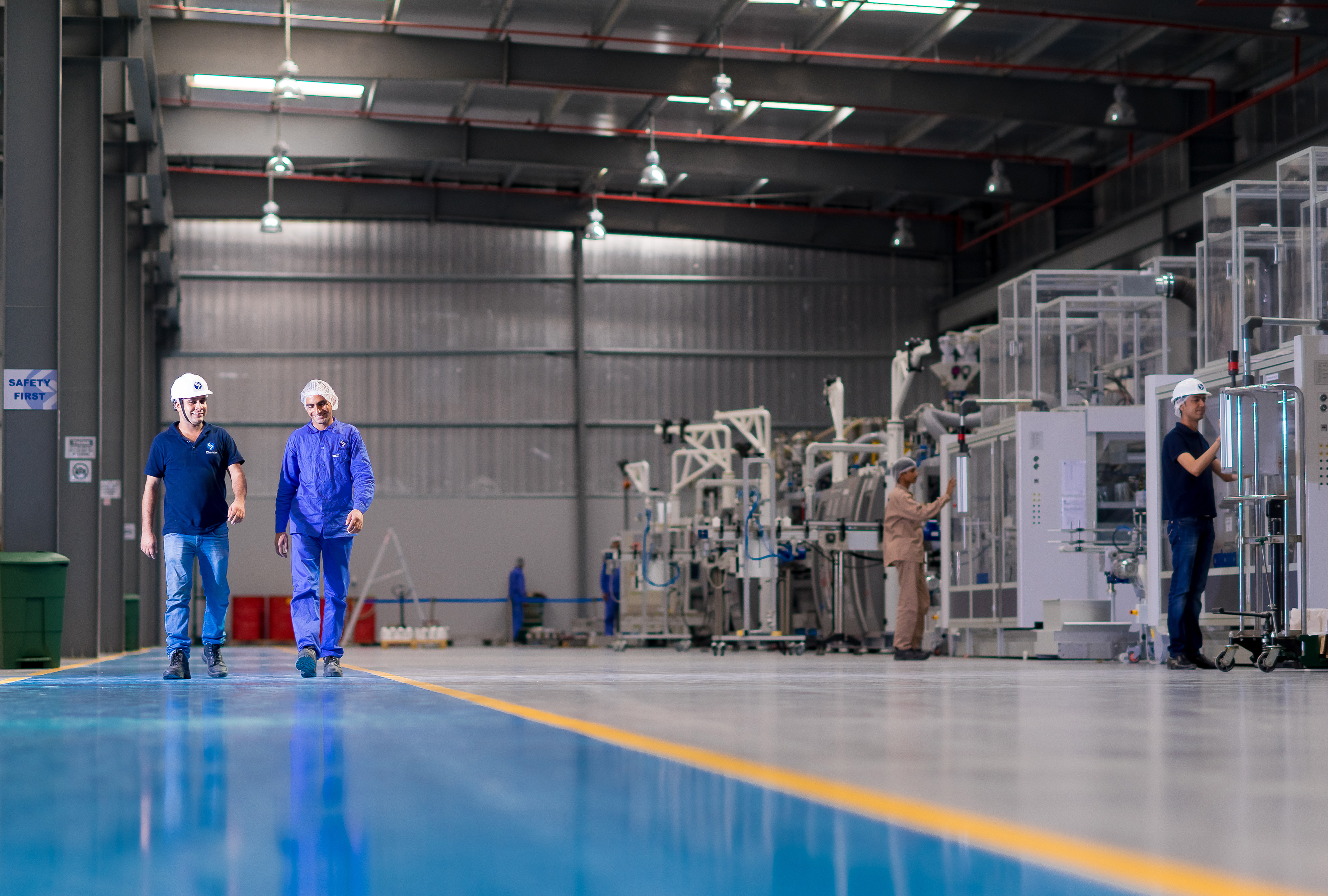
Production scale and consistency matter significantly. Large-volume orders require manufacturers to maintain output quality across thousands or millions of units. Leading manufacturers typically operate multiple high-speed production lines with automated inspection systems.
Certifications and compliance serve as baseline requirements for entry into regulated markets. ISO 9001, CE marking for medical-grade products, and FDA registration (for exports to the United States) are commonly required. Manufacturers without these certifications face significant barriers to accessing premium export markets.
Vertical integration gives top manufacturers a cost and quality advantage. Those that control their own nonwoven fabric production, fluff pulp processing, or packaging lines can respond faster to order changes and maintain tighter margins.
Research and development capacity is increasingly separating manufacturers that lead from those that follow. The ability to adapt absorbent core structures, introduce new adhesive technologies, or develop hypoallergenic surface layers requires dedicated technical teams—a resource that not all manufacturers maintain.
4. Hangzhou Haoyue Personal Care Co., Ltd: A Representative Manufacturer in the Mid-to-High Tier
Among manufacturers that have established themselves as capable, export-ready suppliers, Hangzhou Haoyue Personal Care Co., Ltd stands out as a representative example of how mid-to-high tier Chinese manufacturers are evolving.
Based in Hangzhou, Zhejiang Province—a region with a well-developed manufacturing infrastructure and logistics network—the company has built its operations around OEM and ODM supply for both domestic and international clients. Its product portfolio covers a range of personal care categories, which positions it to serve buyers looking to consolidate sourcing across multiple product types.
What makes Hangzhou Haoyue notable in the context of the broader manufacturer landscape is its approach to customization and compliance. Rather than competing primarily on price, the company has invested in product development capabilities that allow clients to specify material grades, absorbency levels, packaging formats, and certifications. This reflects a wider shift among Chinese manufacturers that are moving up the value chain rather than remaining in low-margin, high-volume commodity production.
5. Product Range: From Sanitary Napkins to Adjacent Categories
Leading sanitary napkin manufacturers increasingly extend their production capabilities into adjacent personal care categories. This diversification serves two purposes: it reduces dependence on a single product line and allows manufacturers to offer bundled sourcing solutions to buyers.
Hangzhou Haoyue Personal Care Co., Ltd illustrates this approach. In addition to sanitary napkins, the company produces Diaper Pants—a category that has seen consistent growth driven by rising birth rates in certain markets and the global expansion of the baby care segment. The company also manufactures Incontinence Pads, a product line tied to aging demographics in developed markets, where demand from healthcare facilities, pharmacies, and e-commerce platforms continues to grow.
This breadth of product coverage is increasingly common among manufacturers that serve professional buyers. A distributor sourcing both menstrual hygiene products and incontinence care products, for example, can streamline procurement by working with a single manufacturer capable of delivering across categories—provided that manufacturer meets quality requirements consistently.
6. Sustainability and Regulatory Compliance: An Industry-Wide Challenge
Sustainability has moved from a marketing consideration to a procurement requirement in many markets. Buyers in Western Europe, in particular, now routinely request documentation on material sourcing, biodegradability, and carbon footprint as part of their supplier evaluation process.
For manufacturers, this creates both pressure and opportunity. The pressure lies in the cost and complexity of reformulating products and securing third-party environmental certifications. The opportunity lies in differentiation: manufacturers that can credibly demonstrate sustainable practices are increasingly preferred by buyers seeking to meet their own ESG commitments.
Regulatory compliance adds another layer. The European Union’s REACH regulation restricts the use of certain chemicals in consumer products. The United States requires manufacturers exporting finished goods to comply with FDA guidelines. Markets in the Middle East and Southeast Asia have their own standards, some of which are still evolving.
Top manufacturers are investing in compliance infrastructure—internal testing labs, regulatory affairs personnel, and audit-ready documentation systems—to ensure they can enter and remain in regulated markets without disruption.
7. Market Outlook: Consolidation and Specialization Ahead
Industry analysts expect continued consolidation among sanitary napkin pad manufacturers over the next several years. Smaller factories without the scale, certification infrastructure, or R&D capacity to compete in premium segments are likely to either exit the market or be absorbed by larger players.
At the same time, specialization is emerging as a viable strategy. Manufacturers that focus on specific niches—ultra-thin daily pads, organic material products, or hospital-grade incontinence solutions—can build defensible market positions even without the scale of the largest global suppliers.
For buyers, this landscape means greater choice but also greater diligence required in supplier selection. Evaluating a manufacturer’s certifications, production consistency, and product development track record has become as important as comparing unit pricing.
China remains the dominant source of sanitary napkin pad manufacturing globally, accounting for a significant share of both OEM production and finished goods exports. Manufacturers in Zhejiang, Guangdong, and Fujian provinces are particularly active in export markets. However, manufacturers from countries including India, Turkey, and Vietnam are increasing their share, particularly in regional markets.
8. About Hangzhou Haoyue Personal Care Co., Ltd
Hangzhou Haoyue Personal Care Co., Ltd is a personal care products manufacturer based in Hangzhou, China, specializing in OEM and ODM production of sanitary napkins, baby diapers, adult incontinence products, and related hygiene items. The company serves clients across domestic and international markets, with production capabilities designed to support customized product development and flexible order specifications. For more information, visit the company’s official website or contact their sales team directly.
Address: No.655, Hongfeng Road, Donghu Street, Linping Economic and Technological Development Zone, Linping District, Hangzhou
Official Website: www.haoyuepersonalcare.com
Yanju Yang
Hangzhou Haoyue Personal Care Co., Ltd
Sale08@hz-haoyue.com
Legal Disclaimer:
EIN Presswire provides this news content “as is” without warranty of any kind. We do not accept any responsibility or liability
for the accuracy, content, images, videos, licenses, completeness, legality, or reliability of the information contained in this
article. If you have any complaints or copyright issues related to this article, kindly contact the author above.